#future #futurist #ai #artificialintelligence
When you think of AI, do you think you have reached the pinnacle?
What more is there in AI that needs to be mastered?
Yes, not just in ChatGPT but in all AI engines.
Here is a map of Europe by Claude
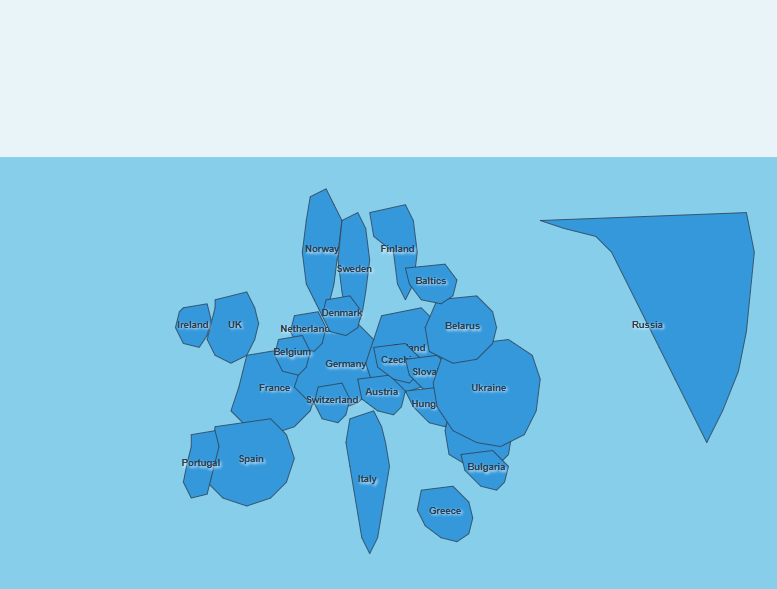
And here is map of Europe by chatGPT-5 when guided by prompts.
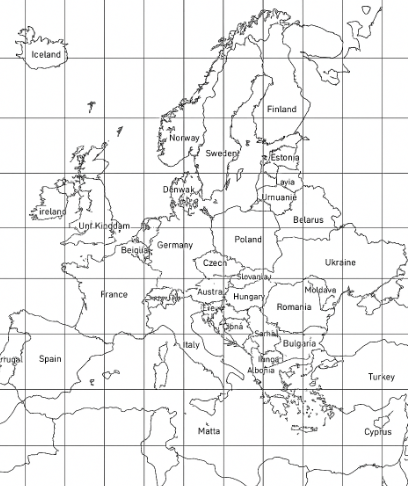
One thing is, it’s not just a map of countries. Yeah, giving the right prompts helps ChatGPT draw a better map. It could not be colored with accuracy as of now. So, how to improve on this?
Why give time to map drawing?
Well, it’s not just map drawing, it’s about design writing and design reading as well.
It’s not just about design writing and design reading; it’s about understanding human directions and comments on printed materials.
For example, it can be used to read the doctor’s surgery descriptions with arrows, or it can be used by earthquake experts to draw the seismic curves.
It can be used by aeronautical engineers for plane functioning, it can be used by road experts to draw alternate paths when floods come.
It can be used by AI to detect the functioning of a rocket in space, understanding all errors and more in a design.
All this with the help of Computer Aided Design (CAD) and allied areas to understand, say, an electric circuit. For this, CAD designs need to be fed into DL models. Similarly, Google Maps needs to be fed into DL Networks to see how it learns to draw maps, or can AI buy a satellite?
All this can be helpful to identify images, designs, and texts on a page of paper.
We need to color a particular area of graphs using graph coloring techniques, dividing the graph into grids coloring within grids
How is all this possible? Supervised learning.
For example, make AI make a map, with the help of Google Maps, as I discussed in the previous article, then provide a colored map as the label for it. Do it for many graphs, then run the deep learning on them. Let it learn on its own with this supervised data.
In short, we need to read human-made curves
The country map is just a beginning.
Here is Leonardo Da Vinci, design of a jet, provided by Claude.
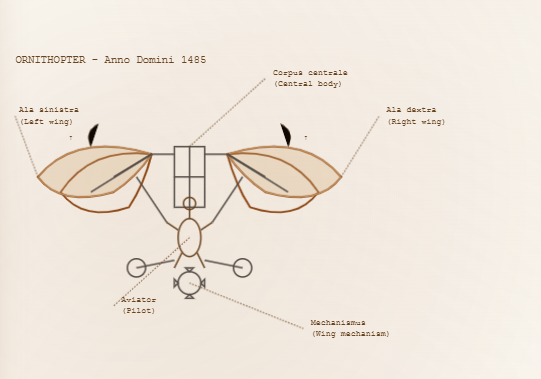
Here, we need to extract the words, the grids where words occur, and the arrows where they point. This can be done using layers of Deep Learning algorithms. It may require some supervised learning to understand all these elements at once — meaning text, arrows, design curves, and design objects. For the design objects, supervised tags are necessary to identify what each item is.
After reaching the top, AI can’t solve the kindergarten’s basic counting book, so why not train these books to count tomatoes and circle the answers? It’s an easy supervised learning task; object detection, counting, and classification are all involved, and they happen simultaneously within the hidden layers of deep learning. We need some image recognition in the system, and once it learns, it can also be used for map reading as well.
Just do it and see where your AI reaches.
Long way to go,
Thanks for reading,
Subscribe for updates.
Warm Regards,
 Artificial Intelligence, Computer Science & Mathematics