AI is a race now; let’s see who is running where this week.
Meta
Meta Muse Glimmer is a 30-billion-parameter model that doesn’t require as much computing power. Muse Glimmer has been evaluated on multiple standard datasets. It now a open-weight model, meaning the neural network weights will be available for anyone to use.
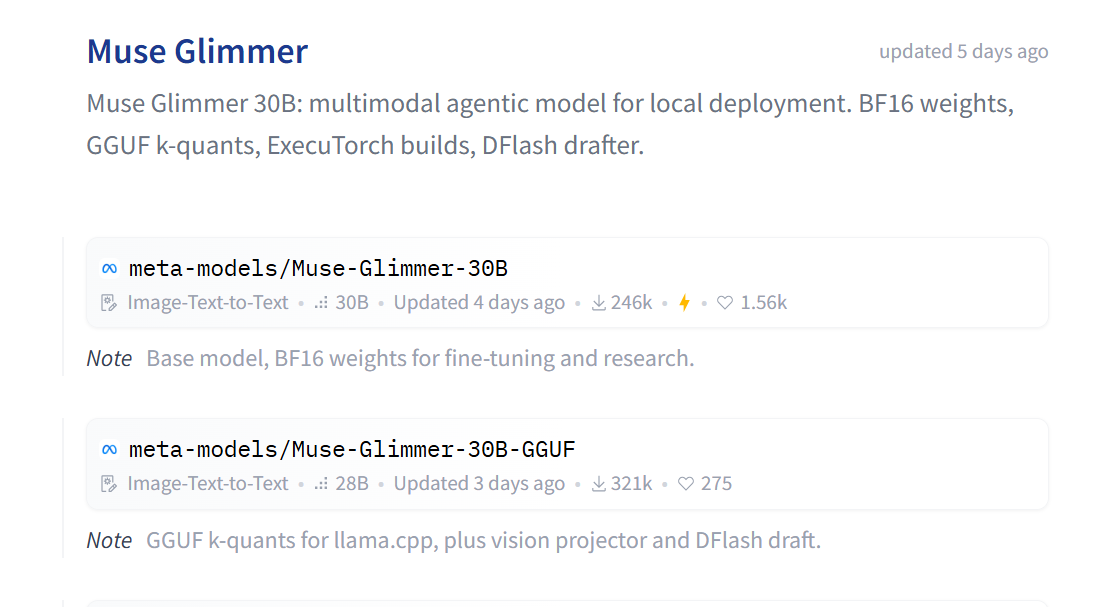
This means you can run these models, you can edit weights, and you don’t need to buy expensive subscriptions.
Muse Code (beta), a terminal coding agent powered by Muse Spark 1.2, Meta’s newest model, was released a week earlier.
Meta has been involved in two lawsuits, one for addiction on social media and another for harm to children running into millions in settlement.
NVIDIA
NVIDIA released Nemotron 3.5 Lightning, a 30 billion-parameter model, as open source. The model can be downloaded and run on appropriate systems. This could challenge the AI industry: if it becomes the model of choice, people would run AI on their systems instead of using APIs and the cloud. This is just a beginning; this can also solve data center problems.
NVIDIA also launched NeMo Switchyard, an open-sourcelibrary for smart routing among AI agent tools.
New proposal of NVIDIA’s $500 billion financing platform will lease expensive AI chips and AI infrastructure by considering these AI units as assets. The partnership includes organizations such as Goldman Sachs and KKR. This accounts for the fact that a loan can be taken on these assets. It can expand NVIDIA’s economic growth, given compute is its pride.
OpenAI
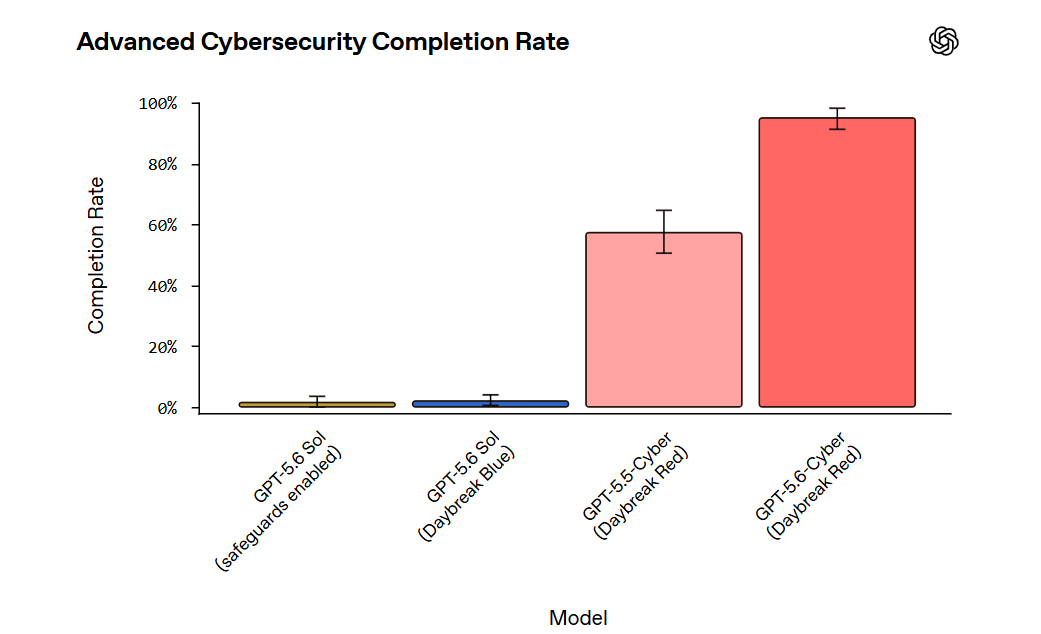
OpenAI released Daybreak- Blue and Daybreak- Red. GPT-5.6-Cyber was also released this week as part of Daybreak Red build on GPT‑5.6 Sol. These models vary in capabilities, but all focus on cybersecurity. GPT 5.6 Cyber has features of GPT‑5.6 Sol and looks for security, including zero-day vulnerabilities. GPT 5.6 Cyber has more than 90% cybersecurity completion rate, here below, from OpenAI,
There are some rumors that the next OpenAI model, Doug,is coming soon.
Chinese AI-ByteDance and DeepSeek
ByteDance is a Chinese company and the parent company of TikTok. ByteDance is reportedly training a 10-trillion-parameter model. If this model goes into action, TikTok could be revolutionized. Social media won’t be the same ever again. And companies like Anthropic and OpenAI may feel the pressure, as they don’t have TikTok’s social media power. Imagine a social media firm with AI power like that! Meta has so much social media power too; is Meta using AI to that extent? Not yet, though! Meta was recently sued for recommendations in question and addictions. China is a better space to grow in for ByteDance, though. Let’s see if China sues Chinese companies for such AI use, addiction and harm.
As DeepSeek is gaining popularity, it is reported that DeepSeek is increasing its prize by a big margin depending on the type of use and plan.
Anthropic and Google
Apart from watermarking images, these companies are now watermarking text. Yes, you heard it right, watermarking text. In this form, the sentence is altered so the reader can’t understand it in first go, though it can be detected that the text is AI-generated. However, when edited, this watermark or trace that AI wrote the text goes away. As EU laws are made for AI, AI-generated texts, images, and videos must be marked before being released to users. Anthropic and Google have reportedly added these features.

