Note: This a duplicate copy. The original is on authors link, (PDF) The Compute Revolution
Abstract-The compute revolution is here. We are living in it. We are witnesses to it. LPS (Land, Power and Shell) are the new norms. But I say a distributed compute is the most important thing now. Why do only seven companies hold all of the world’s power? Why don’t people, groups, and startups join hands, own their own LPS, and provide compute to communities that want to know who their providers are? This helps distribute money and the world’s power into the hands of so many people. Communities would trust a neighbour they know for compute, with a warm touch, rather than a big company that doesn’t have time to reply to customer queries. Compute is the next gold. Can we all buy it? A share in big companies is not enough. Can we all own our GPUs if they have selling value? Startups that are drying under strict AI acts can buy the LPS and automation breakthroughs. Can LPS be the next startup business? Be a provider of LPS! It would rationalize the distribution of money in the world and provide services that are warm for local communities.
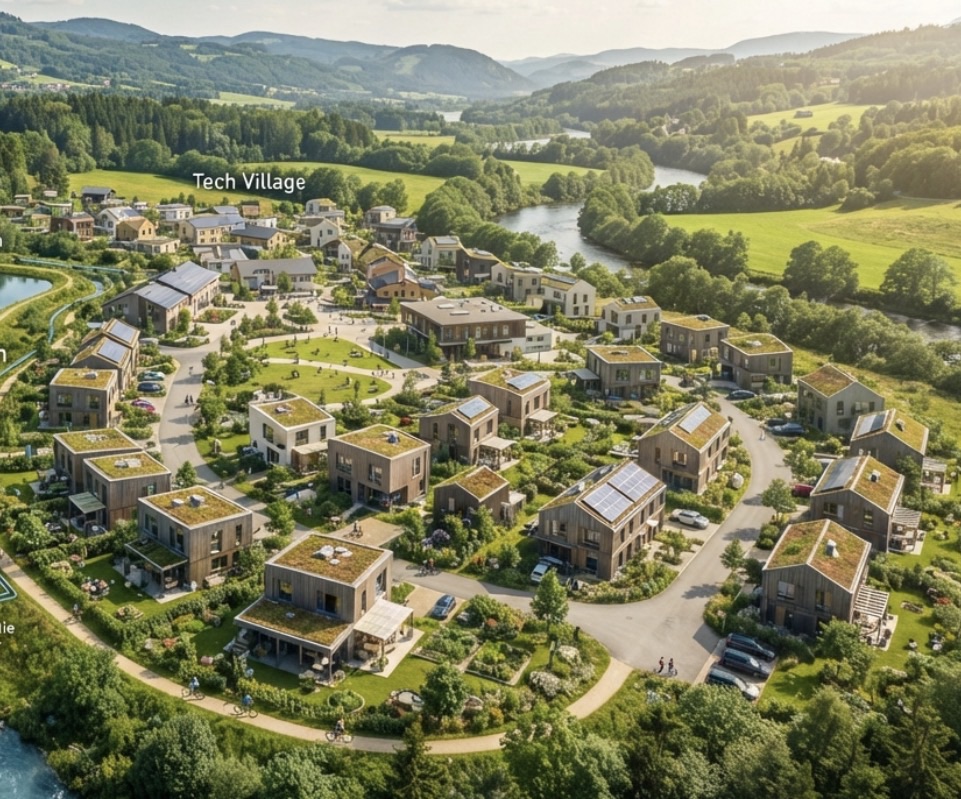
With the increasing demand for AI, higher compute and more power are required. As Jensen Huang, CEO of NVIDIA, said, the time has come to take care of LPS -the Land, the Power, and the Shell. The power is concentrated in the hands of a few tech companies. The time has come to distribute LPS. LPS is the new norm, as Huang states. But we must not forget the need of data centers. With newer models coming as open weights, the model becomes accessible to users. Users do not need to pay to use these models. In the future, users can shape the weights for their convenience to match the outputs they want. This can be called personalization of model use, which can be accomplished with open-weight AI models. This is a big leap; not everyone needs to run models on their own compute power, so the compute work can be distributed. You run your models on a local system that can accomplish this task. That means you need to invest in machines that can run these models locally.
There was an era when iron extraction breakthroughs were made worldwide with great enthusiasm. That was part of the Industrial Revolution; machines, steam engines, and automation drove travel and development toward the modern world we live in. Before that, people grew seeds everywhere to feed local communities, and farming practices were refined over centuries. Now, the whole world looks to AI and compute. We all need AI now, as if it were a right. This is the AI revolution. AI is not new; however, the breakthroughs we’ve achieved here on Earth have been remarkable in recent years. The term “ AI revolution” may not be the right way to describe the phenomenal change happening in the world today. The right term I flip for it is “The Compute Revolution”. The new term, LPS, should also be marketed so common people can engage with it. Why should power be in the hands of just a few seven companies? It must be distributed to people of Earth.
No field is left untouched by this AI revolution, of which the Compute Revolution is one part. We all need compute. And as Huang said, LPS are the future. So, can we, as a society, take part in the LPS movement? Why just the seven big companies? Why can’t ordinary people take part in the Compute Revolution? The LPS (Land, Power, and Shell) should now be used to take out loans from banks. What if each person owns some compute power and allows it to be monetized? Instead of buying shares in a company, what if a group of people join hands and buy Land for the AI Compute Revolution? Why not form a startup together and buy GPUs that can provide AI cloud services to a community? Small business! But with care, that data is secured within the community. That compute is taken care of by solar panels of a startup company, or by a mini nuclear reactor, which is already in the development phase?
Why not have a startup own an LPS and take a loan to provide services using a downloaded open-weight model? Not everyone can buy a GPU laptop to run even small open-weight models. Why not provide your colony with AI power for a small subscription fee? People would buy the subscription, and it would be safe because they trust you, being from the same community. Why not have more startups around the world buy compute for their communities and provide them with open-source models run at your LPS? Why buy shares of a company and watch the chart daily, instead run the compute on your community’s small grid near a community isolated parts, which can be managed for cooling the capacities, and at the same time make sure the waste from compute is not harmful, as it is not at that high scale to make dangerous marks in water supplies? Or buy your starup LPS under sea as South Korea is doing? Why not keep your computer powers in a desert as Sam Altman said recently. You can buy and run a distributed LPS. Why not?
If you have the capacity, buy your share of LPS. But your GPUs, too. Provide your neighbours with compute by charging a modest fee or offering dinner. And know you are getting rich, as compute is the next gold. LPS is the next silver. Why wait only for big companies to make profits? You can make profits, too, unless you are in the EU, where laws are very stringent and paperwork follows heavy protocols. In that case you can own the LPS, and lend in to a third party who can take care of formalities at EU AI offices.
If that still doesn’t satisfy you, download your open-weight models and learn how to run them on your system. But the system must also have money power. And the system prize must increase over time as well. Keep the system cool in your house. You don’t need LPS then. All you need is to download the latest open-weight models, run them, and be happy. No cost to you except the power, which you can get from solar panels well accumulated before the compute. Such is the power of the distributed compute revolution, which is starting now with open-weight models.
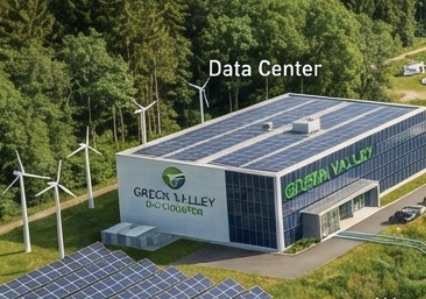
The future is in distributing LPS and compute, which can be located far away but work under one distributed umbrella. Smaller LPS means less pollution at a place, and waste production as much as a community can clear. Communities that don’t want that compute waste can own compute in each home and manage their own cooling and compute systems with open-weight models. Toward a more balanced world.
Thank you for reading.
Subscribe for updates.

