Clairic is a System One extraction model means its not like System Two (LLMs) model. It extracts, computes, estimates, and forecasts values from unstructured inputs rather than using a neural network of billions of parameters to generate output. It is faster, cheaper, and more accurate than typical LLMs. Let’s test Clairic now, then.
Let’s test Clairic today; we need the customer email and company policy here. I made these both statements for execution for test on complex inputs.
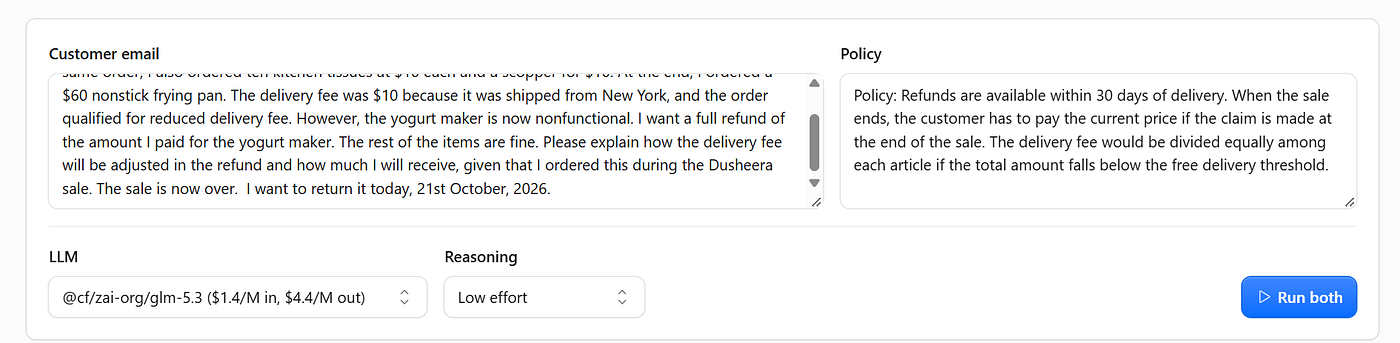
Customer Email:
“Hi, I ordered a yogurt maker that cost me $50. In the same order, I also ordered ten kitchen tissues at $10 each and a scopper for $10. At the end, I ordered a $60 nonstick frying pan. The delivery fee was $10 because it was shipped from New York, and the order qualified for reduced delivery fee. However, the yogurt maker is now nonfunctional. I want a full refund of the amount I paid for the yogurt maker. The rest of the items are fine. Please explain how the delivery fee will be adjusted in the refund and how much I will receive, given that I ordered this during the Dusheera sale. The sale is now over.”
Policy:
“Refunds are available within 30 days of delivery. When the sale ends, the customer has to pay the current price if the claim is made at the end of the sale. The delivery fee would be divided equally among each article if the total amount falls below the free delivery threshold.”
Here is the output,
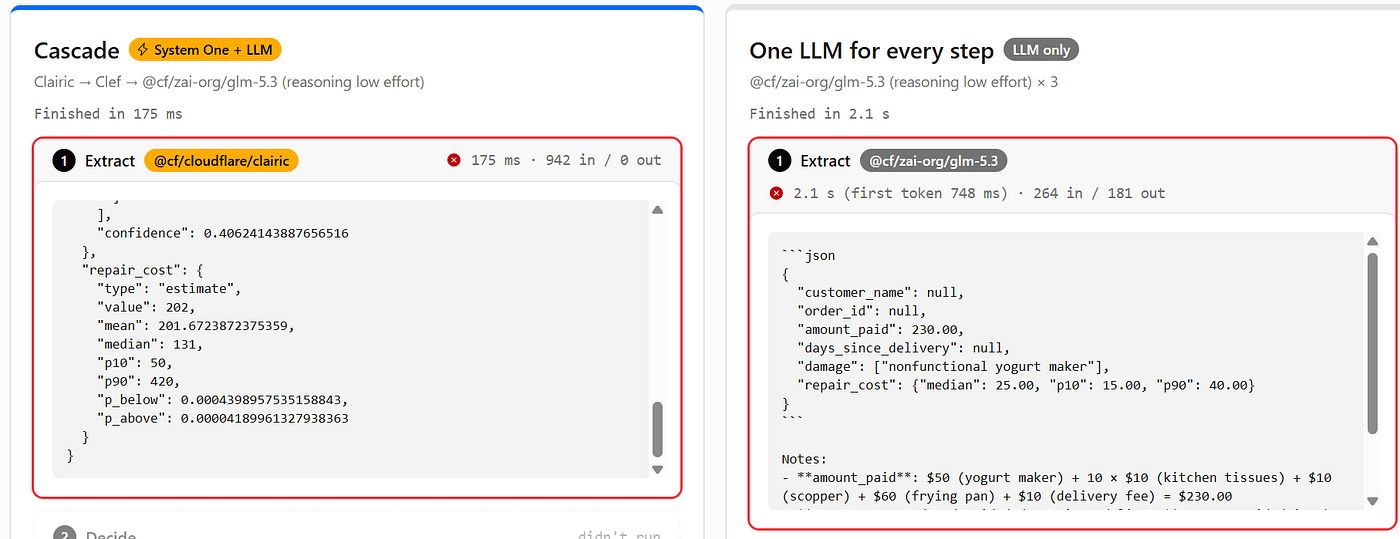
However, it gave an error that the date of order was not provided here,
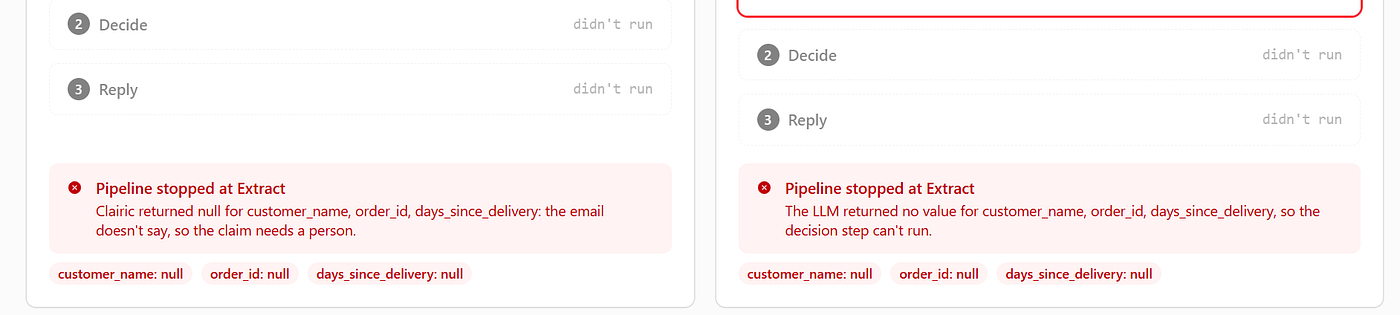
It says the dates are missing.
So, I ran it again after providind dates.
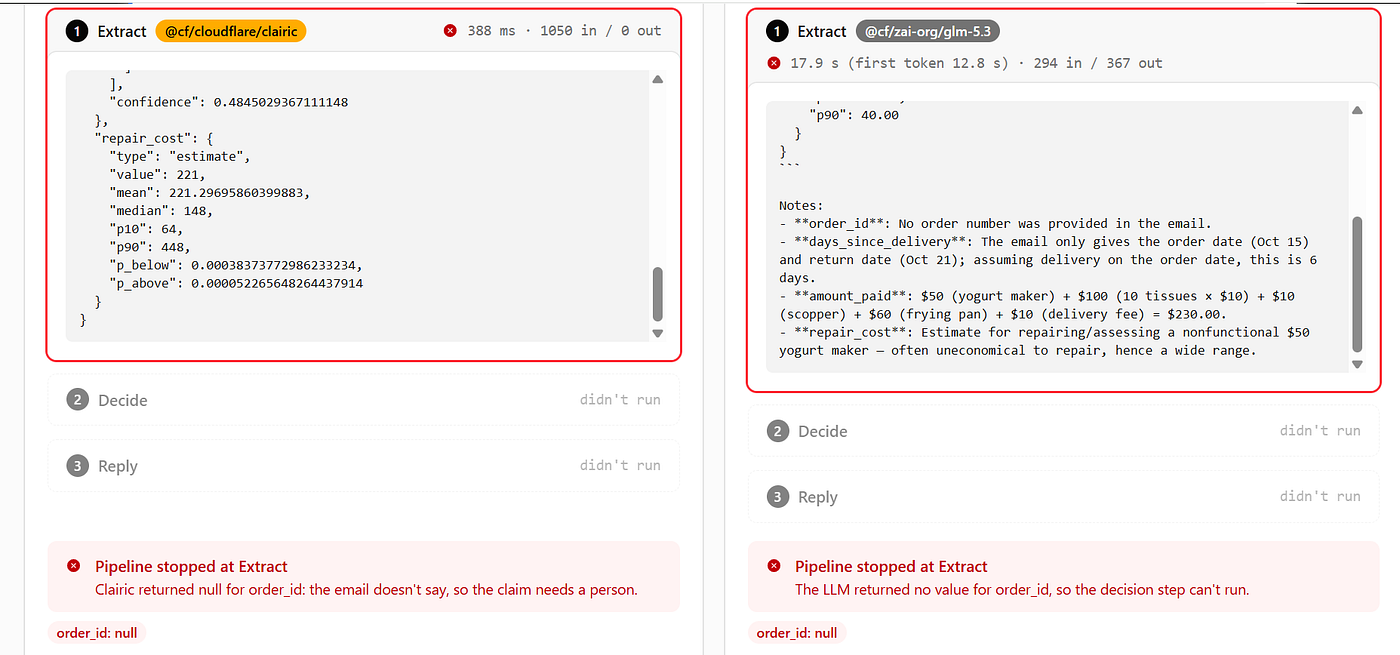
Now it says the order id missing, so let’s provide it the order ID. Here are the changes:
“ Hi, I Alka ordered, orderid 123Z I ordered a yogurt maker that cost me $50 on 15th October, 2026. In the same order, I also ordered ten kitchen tissues at $10 each and a scopper for $10. At the end, I ordered a $60 nonstick frying pan. The delivery fee was $10 because it was shipped from New York, and the order qualified for reduced delivery fee. However, the yogurt maker is now nonfunctional. I want a full refund of the amount I paid for the yogurt maker. The rest of the items are fine. Please explain how the delivery fee will be adjusted in the refund and how much I will receive, given that I ordered this during the Dusheera sale. The sale is now over. I want to return it today, 21st October, 2026.”
Here is the output, the left with Claire and right with Claire and GLM:
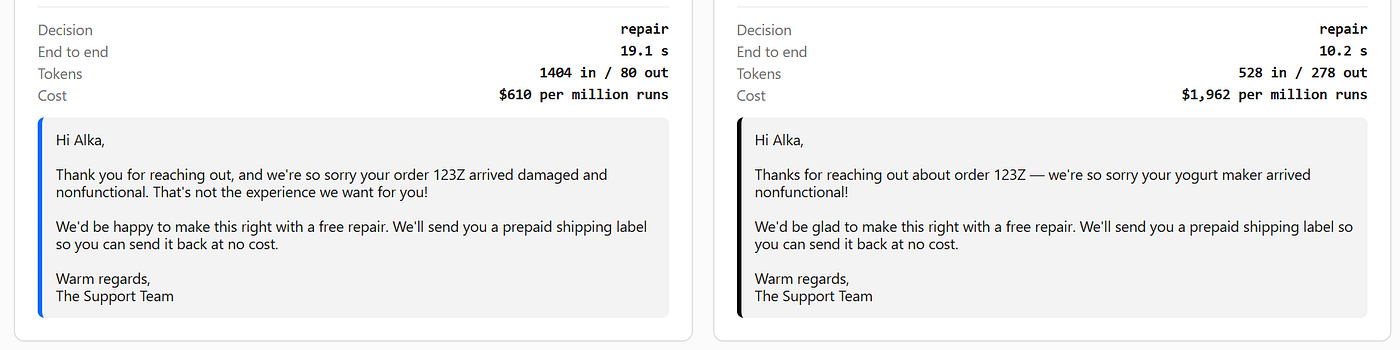
The decision is:
“Hi Alka, Thank you for reaching out, and we’re so sorry your order 123Z arrived damaged and nonfunctional. That’s not the experience we want for you! We’d be happy to make this right with a free repair. We’ll send you a prepaid shipping label so you can send it back at no cost. Warm regards, The Support Team”
But I provided the policy as “Policy: Refunds are available within 30 days of delivery. When the sale ends, the customer has to pay the current price if the claim is made at the end of the sale. The delivery fee would be divided equally among each article if the total amount falls below the free delivery threshold.”
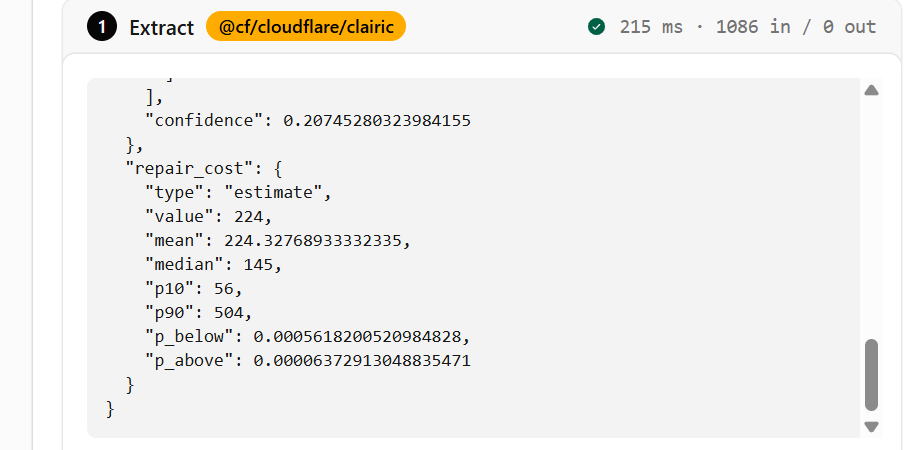
So, it seems the system is working for a specific, predefined repair policy for now. Good that it works well for pre-specified policies. It even gives repair cost in the System One command prompt here:
The analysis doesn’t work fully well; see the decide step by model clef, here,
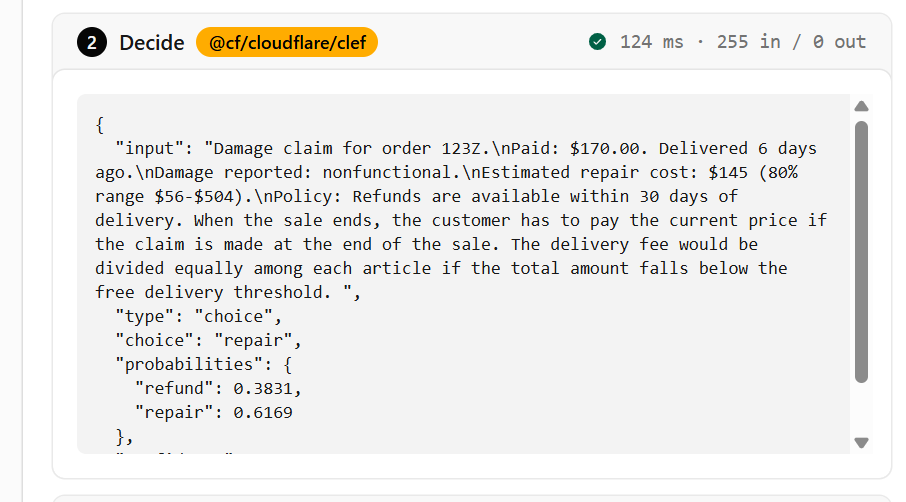
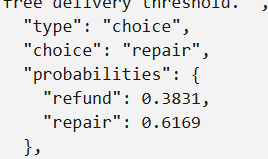
I wanted a refund, but it asked for a repair, which was not mentioned in the user-defined policy. See the figure below; the probability for repair is higher than the probability for a refund.
The math isn’t right right now. The yogurt maker that cost me $50 and it showed paid $170 which is not the total of what I mentioned in the complex customer input. See the input form user at the top of the article.
But in the future, we need it to run for custom policies.
So, we need to work out more to make the math work properly. I know the input I provided was complex, but that is how we learn to process complex real-life problems.
It was way faster than LLM and worked well with clear cut inputs. The policy seem to be hardcoded. Anyways it’s the first step Clairic. Improve more in next release, try harder real life inputs.
However, this is a fast system; the extraction works well, and it approximates confidence levels at each step. But we need more!
Thanks for reading,
Subscribe for updates.

