A use case of a designer cobot? A dishwasher can’t handle very big oily frying pans. Want one in the kitchen washing area?
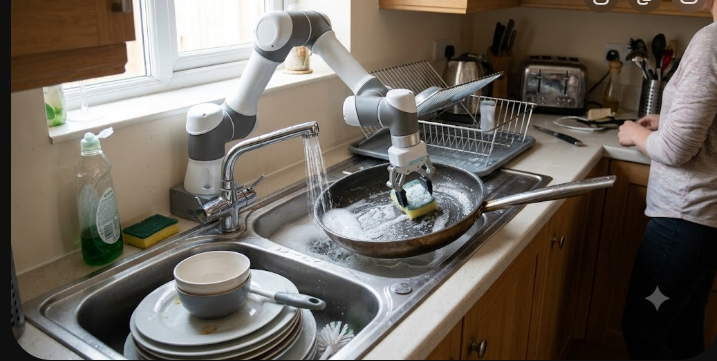
A designer cobot (collaborative robot) is a robot engineered to work alongside humans for specifically personalized use. Cobots are restricted in size and are designed to be safer to be near humans, unlike other industrial robots that require special protocols when in proximity to humans or even machines.
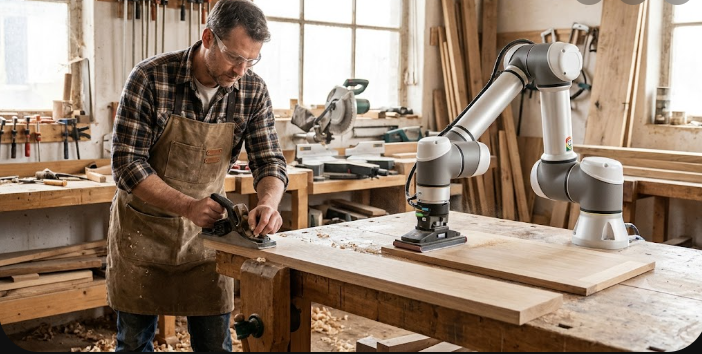
When each cobot is uniquely designed for a specific task, cobots can help with repetitive household work such as setting the table, washing dishes, dusting, and mopping the floor. These are daily, repetitive tasks; once learned, they can be done with little hassle, with some guidance. They can train alongside service professionals in carpentry and learn to serve as assistants to painters or plumbers, since they are cheaper than robots and lighter.
But we all need to work in our own way. Every man and woman has their own way to manage their kitchen and house. The way you work, the way you want things done in your home and kitchen all depends on your choice. For example, some mop after you get home from the office, while others do it at lunchtime after the kids are back from school. The house cobots must be ready for this, adjusting lights and learning for that home.
Got a sprain in your back? Can’t fill in the dishwasher? Can’t wash the bathroom? Want help with daily washing? Ask for an affordable designer cobot!
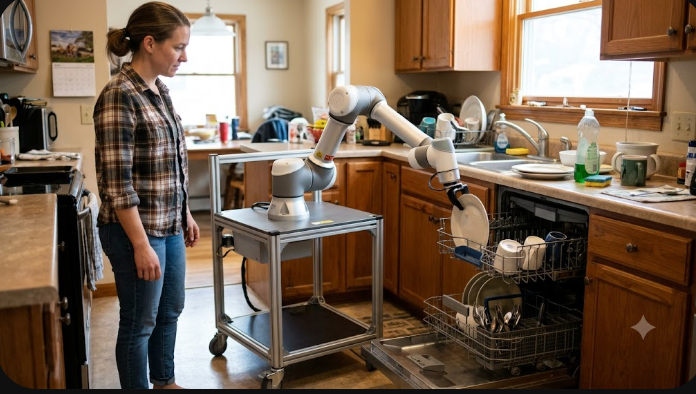
From washing vegetables and loading the dishwasher to cleaning bathrooms, cobots can be trained to do it all. And they can do it in lessor time and at a lower cost than humanoids or industrial robots. Why only one-arm cobots? You can get your designer cobot with three arms as well.
With cobots, even small-scale operations or startups can build automation where industrial robots are expensive to buy and install.
Cobots can learn by physically training the arms, controlling them remotely, or using vision-based learning. It depends on the kind of job the cobots need to be trained for. Once the cobot learns the angles, velocity, and aims, it is ready to deliver its customized or designer services.
However, cobots can’t do everything, such as moving around freely and taking random new orders from humans to pursue. These tasks are better suited to humanoid robots, or, in industry, to industrial robots.
Future cobots must adapt to changing lighting in the installation location; they may also need to learn to work when the power is cut. Cobots must be made safe to work with children and adults at home.
Alongside humanoid robots, cobots can be developed to compete with humanoids. Not everyone may want a humanoid but still want a cobot-operated bathroom or kitchen dishwasher. Very small-scale professionals may want to add cobots to their teams to improve work progress.
The future of cobots lies with remotely operated designer cobots. Cobots can be operated remotely while they work on specific tasks, and if they get stuck, it rings a bell. You are watching a movie when you get a message; you open the app on your phone and help the cobot stuck with a delicate plate in the dishwasher. It is the best way to address the limitations cobots face today.
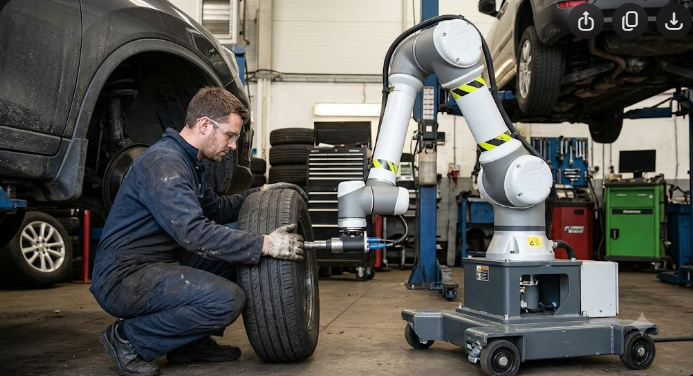
A world where small cobots are installed in parts of the house to do repetitive tasks people need to do. Painters can install them on their ladders, while plumbers can avoid tough tasks with cobots. Carpenters can use cobots to cut wood after learning tasks from the best craftsmen, while a car repair mechanic can get help from a cobot with fixing tires. All this without a humanoid, but with a designer cobot who learns your needs.
Thank you for reading,
Subscribe for updates

