Balancing knowledge and technology
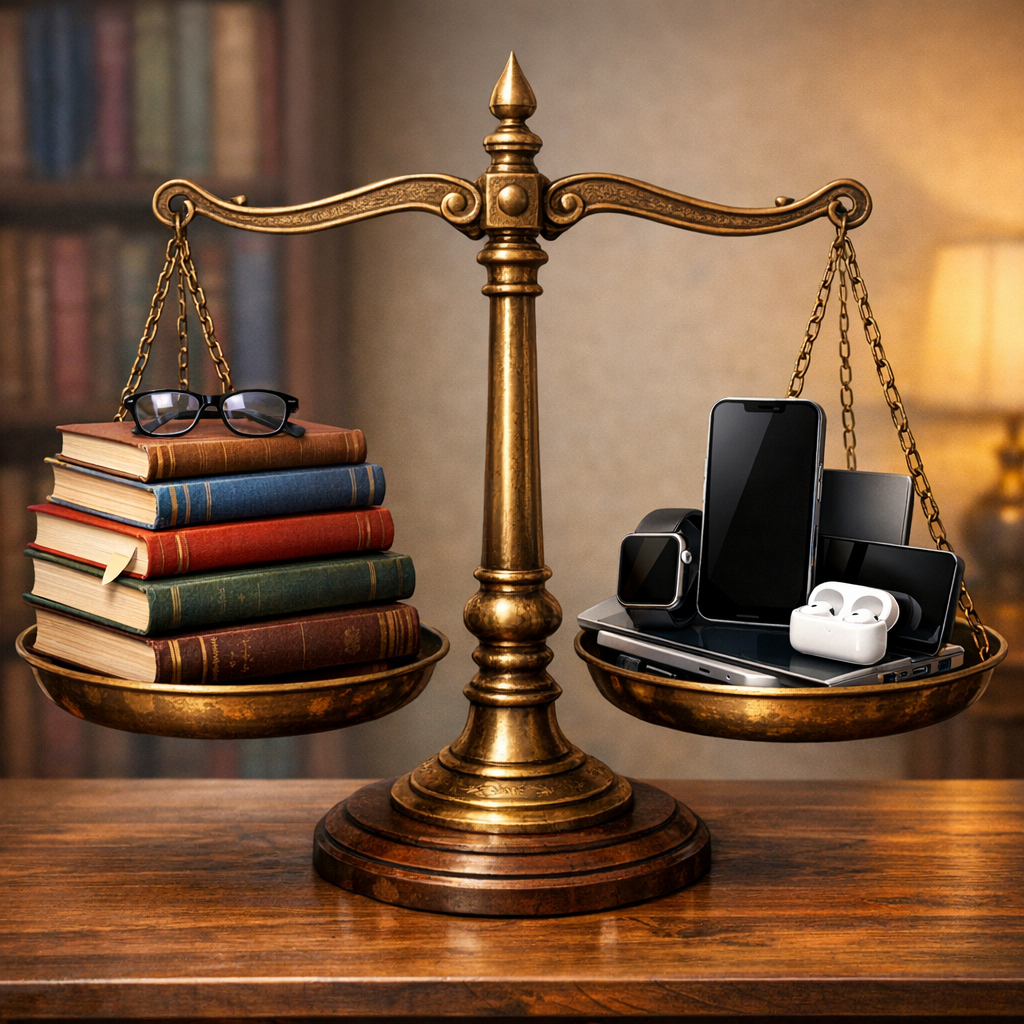
So, when it comes to children, we need to be more cautious. The current trend for governments around the world is to shift their focus from tablets and laptops, once introduced in schools, back to paper, pen, and physical books.
What is the right approach for children?
It is a lengthy discussion; we will cover some points here.
There are two things first:
- What to teach?
- How to teach?
Once what to teach is decided, it can help in deciding how to teach!
As in Sweden, Johan Pehrson served as Sweden’s Minister for Education (September 2024 — June 2025), focused on physical textbooks and banning electronic gadgets in schools, among other measures. The new Education Minister of Sweden, Simona Mohamsson Pehrson, has a continued agenda to use physical textbooks and to ban mobile phones in schools apart from other issues.
Such measures are being talked about around the globe, Sweden not being alone.
But there are also criticisms of this. Some say that this can lead to a generation that may be unemployed, as they are not aware of tech and AI when they graduate from school. This criticism should not be taken lightly. We need the kids growing up in AI to know what AI is!
The best approach is a balance between books and gadgets, as shown in the image above.
Let’s talk about young kids first. Children under 10 years of age, if exposed to gadgets, can compel parents to show them gadgets while they eat or drink milk. This is a trend in the part of the world I live in, and parents have to give in. So we should stop teaching gadgets and tech to children under 10 years of age.
Above the age of 10, children can be introduced to AI and Tech, but smartly, knowing we need to open the tech funnel slowly.
Students must be taught theory from books, and pupils must learn through paper and pen, a nice initiative taken by Sweden. But some syllabi must be cut somewhere to teach students what AI is, a world they will face one day.
Hence, we must teach students the theory of Tech and AI, with labs where practicals are held. In practicals, these senior school children would learn how to use gadgets, what a prompt is, what a web browser is, how to search on Google, and so on. These topics would be discussed in detail in upcoming newsletters.
But at the same time, we know some secondary school students, especially teenagers, can try pranks, so they must be given a private network to work on. Not the entire internet. Just a private network where they can work on learning, not trying, learning is the aim. This can be like a safeguard to any harm they can cause out of their curiosity to try new things, a symbol of growing age, and curiosity!
This would ensure that pupils have understood the theory through printed books, as Pehrson of Sweden proposed, and, at the same time, in labs, they would be taught how to use a laptop and a smartwatch.
Another thing that stops children from using mobile phones is not enough; they must be stopped from using any smart gadget, such as a tabs, or even from overreliance on other AI tools till they become of right age. What is the right age for which device, we need to understand that as well.
This is to say, basic digital skills to be added to the printed books curriculum, with practical labs in computer rooms, are needed so that children are ready to face the adult world with confidence and pride.
This is not easy to weigh each topic that must be taught and each thing to be practiced in the computer and AI labs. There are students who are very curious and want to skip degrees and enter work right after school. Denying them this opportunity to learn can make them feel set back.
However, we must include paper-and-pencil studies, as proposed by Pehrson of Sweden. This would help in learning. Paper and pencil mean something, and it is a fact not to be denied that we must teach with paper and pencil. Teaching with tablets and laptops is good for times such as a pandemic, but now we are in better times. We can teach children with paper and pencil, unless online classes are needed for some pandemic-like conditions.
We must know that we have to prepare children to face the world as they graduate from school. We must teach them, but with care and caution, that AI can be harmful. As I always say, use VPNs and private networks to teach children in labs.
For homework, paper-and-pencil is a good option too. We live in advanced times, and AI-based evaluation is now easy and can be done online. Children can do the homework, and parents can upload the answer sheet, which can be evaluated online by AI tools the schools can buy from the market. It would be easy for teachers to get homework evaluations from AI apps. Teachers can focus on better illustrating tools of adult worlds, not limited to AI and Tech, but essentials. Teachers can focus on lab work, and lab assessments can also be conducted online using AI.
The following two things must be in your hands if you want to define what education for children means in these advanced age:
- What to teach?
- How to teach?
Yes, you can find more about it in my next newsletter on evaluations of children learning with AI.
Thank you for reading.
Subscribe for updates.
Regards,

